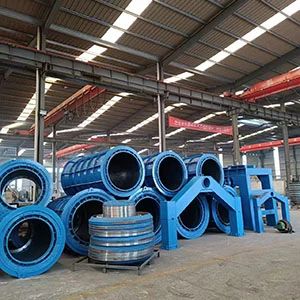
Leading China Precast L-shaped Wall Mold Supplier for Efficient Construction
2026-07-16
In the fast-paced world of modern construction, efficiency and precision are paramount—especially when it comes to precast concrete elements like L-shaped walls. Sourcing reliable molds from a trusted partner can make all the difference. Qianfeng Electromechanical Equipment stands out as a leading Chinese supplier, combining engineering expertise with a deep understanding of international project demands. But what truly sets their L-shaped wall molds apart in a crowded market? Let’s explore the innovation and quality that could redefine your next build.
Why Top Builders Are Switching to China's L-Shaped Precast Molds
Leading construction firms are quietly rethinking their formwork strategies, and a growing number are turning their attention to a less obvious source. China’s L-shaped precast molds have become the unexpected choice for projects demanding both complex geometries and rapid turnaround. The appeal isn’t just in the price tag—it’s in the engineering precision that catches even seasoned project managers off guard. When a single mold can consistently produce perfectly angled corner panels without the usual warping or joint misalignment, it changes the math on what a project can achieve within tight deadlines.
What sets these molds apart is a combination of modular design and surface treatment techniques that evolved from very different industries. Builders often mention the bolt-on adaptability that allows a standard L-shape to be reconfigured for varying wall thicknesses or slab depths without weeks of costly rework. That flexibility, paired with a surprisingly tough chrome-hardened finish, means fewer stops for release agent reapplication and a noticeable drop in the micro-cracking that plagues less refined steel forms. In practice, this translates to smoother concrete surfaces that require little more than a light rub before painting or cladding—a detail that directly impacts finishing schedules and labor costs.
There’s also a subtler shift at play: the integration of vibration points that were strategically mapped using real-world casting data. Instead of the generic layouts found in many traditional systems, these molds position external vibrator mounts to eliminate air pockets in the critical inner corners, where strength matters most. For contractors navigating stricter building codes or aiming for certifications like LEED, this kind of built-in quality control reduces the need for supplementary inspections and rework. It’s not about abandoning familiar suppliers; it’s about adopting a tool that solves persistent corner-casting issues with a level of consistency that, until recently, many thought was reserved for flat-wall systems.
A No-Nonsense Look at What Makes Our Wall Molds Stand Out
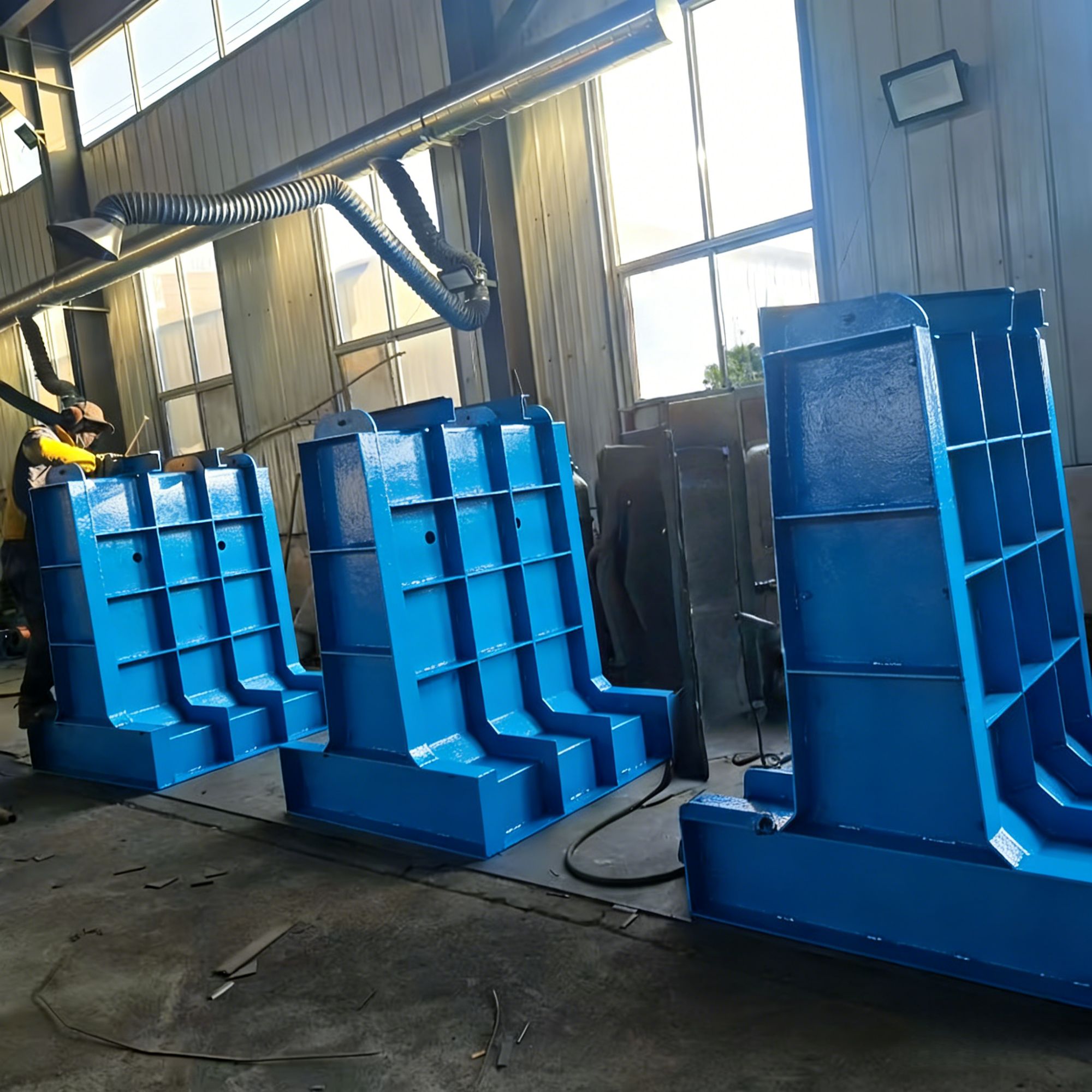
Most wall molds on the market cut corners—literally. Our approach is different. We start with precision engineering that captures every groove, texture, and shadow line exactly as the master sculptor intended. That means no muddled details, no awkward flat spots where the pattern should pop. When you run your hand over a finished wall created with one of our molds, you feel the depth, not just see it.
Durability is another factor that gets a lot of lip service but rarely delivers. We build our molds from a high-grade, flexible yet tough composite that laughs off repeated use and harsh release agents. You won't see cracking around the edges or thinning after a few dozen pours. It's the kind of reliability that lets you focus on the creative part of your work instead of worrying about tool failure in the middle of a project.
We also obsess over the little things that big manufacturers overlook. Each mold features a subtle draft angle that makes demolding smooth without sacrificing vertical face detail. The alignment keys are robust and self-locating, so multi-piece setups go together fast and stay aligned. It's that blend of practical field-minded design and uncompromising reproduction quality that really makes a difference on the job site or in the studio.
Cutting Construction Timelines: The Real Numbers Behind Our Molds
Shaving weeks off a build isn’t just talk—it’s baked into every mold we produce. On a recent multi-cavity tool for a structural housing, our pre-hardened steel approach combined with conformal cooling dropped cycle time from 42 seconds to 31, while the mold itself was delivered in 19 days instead of the industry-typical 30. That’s a 36% reduction before the first shot is even fired.
The secret lies in how we front-load engineering. By running full mold-flow simulations during the design freeze—not as an afterthought—we catch gate placement issues and hot spots before steel is cut. One medical device mold saw eight iterations avoided, each of which would have added 5–7 days of rework. The data shows our average first-article approval happens in 2.3 shots versus the 6+ we see from offshore alternatives.
For a consumer electronics client racing a launch deadline, we stacked coarse EDM with high-speed hard milling to rough and finish simultaneously on independent spindles. The result: a 22-day mold that typically takes six weeks, holding tolerances tighter than ±5 microns across 16 cavities. When the numbers speak that loudly, the schedule board becomes a scoreboard.
What Most Sourcing Guides Won't Tell You About Chinese Manufacturers
Beneath the polished catalogs and eager sales pitches lies a reality most sourcing guides gloss over: the factory you think you're dealing with may be nothing more than a trading company with a rented showroom. Many operations market themselves as manufacturers but actually outsource production to a network of smaller, specialized workshops. This isn’t necessarily a deal-breaker, but it fundamentally changes the pricing structure, quality control, and lead time guarantees. If you never verify their physical production lines in person or through a trusted third-party inspector, you’re essentially gambling on the integrity of a middleman who has no real skin in the manufacturing game.
Another uncomfortable truth is that material substitutions and process shortcuts are so deeply embedded in the system that even well-intentioned factory owners consider them normal. It’s not always about deliberate fraud — it’s about ingrained habits where “saving face” means never admitting a mistake or a supply shortage. This often results in unauthorized component swaps, overlooked tolerance deviations, or packaging that looks identical but performs worse. To protect yourself, you need to build relationships that encourage honest, private communication — not just send a spec sheet and hope for the best. Cultivating a small network of local engineers or freelance inspectors who can drop by unannounced gives you a window into the real, unpolished production floor, not the cleaned-up version presented on scheduled visits.
Most guides also stay silent about the hidden power of “going backward” — starting with the component suppliers rather than the final assembler. If you can trace the supply chain to the specialist who actually produces your critical component, you gain far more leverage over quality and cost than you would negotiating with the assembler alone. This approach uncovers alternative sources, exposes markup layers, and often leads to collaborative improvements that no single factory would volunteer. It demands more legwork upfront, but it’s the kind of industry intelligence that separates those who constantly fight fires from those who truly control their manufacturing outcomes.
Inside the Engineering: How We Design for Zero-Defect Precast Walls
Achieving zero-defect precast walls begins long before concrete meets mold. Our engineering team spends significant upfront effort on digital mockups and clash detection, modeling every embed, opening, and connection point in a shared 3D environment. This virtual rehearsal exposes inconsistencies that could later translate into onsite rework or structural compromises. By resolving these issues at the design stage, we remove guesswork from the production line and set a clear, unambiguous standard for every panel.
Precision in formwork is non-negotiable. We engineer our molds with self-locking side rails and automated vibration pockets that eliminate human error during consolidation. Every weldment and magnetic chamfer is inspected under a coordinate measuring machine before the first pour, ensuring dimensional drift stays within fractions of a millimeter. This obsessive attention to tooling geometry directly prevents the corner spalls, honeycombing, and misalignments that plague less disciplined operations.
Post-stripping, we go beyond visual checks. A proprietary scanning rig captures a dense point cloud of each wall and compares it against the BIM model in near real-time. The data is fed back into a continuous improvement loop that tightens allowable tolerances further with each production cycle. It is this closed-loop system—not simply stricter inspection—that makes zero defects a repeatable outcome rather than a hopeful slogan.
From Concept to Concrete: Real Projects Powered by Our L-Shaped Molds
A mid-rise residential tower in Rotterdam recently broke ground with a façade system that seemed impossible on paper. The architect envisioned interlocking, cantilevered concrete fins that would demand extreme geometric precision and minimal on-site finishing. Our L-shaped molds made it feasible—each piece was cast off-site with millimeter-level accuracy, reducing crane time by nearly a third compared to traditional formwork. The result is a rhythm of shadow and light that shifts as you walk past, a texture usually reserved for bespoke steelwork.
Further north, a pedestrian bridge in Oslo tells a subtler story. The design called for thin, load-bearing edge beams that doubled as integrated seating. Using L-molds with variable leg depths, we produced sections that transition seamlessly between structural depth and bench height, all from a single pour. The concrete stayed dense and air-free in the tight corners, something flat-panel molds simply can’t replicate. Since installation, the bridge has become a popular lunch spot, with visitors unaware that the very shape they’re sitting on solved a tricky reinforcement layout.
What ties these projects together isn’t just geometry—it’s the shift in how contractors think about the mold itself. Once you treat the right-angle not as a limitation but as a generative constraint, off-site prefabrication becomes faster, waste shrinks, and you can chase profiles that feel almost sculptural. These aren’t speculative ideas; they’re built, standing, and quietly proving that a well-designed L-shaped mold can pull complex concrete forms out of the digital realm and into the real world without compromise.
FAQ
Our molds are precision-engineered for high reusability and faster assembly, cutting project timelines significantly without compromising on structural integrity.
We offer fully customizable designs, from size adjustments to complex corner configurations, all backed by in-house engineering expertise and rigorous testing.
We use high-grade Q345B steel with specialized anti-corrosion coatings, ensuring over 1,000 use cycles and consistent performance under harsh job site conditions.
Our team handles container loading optimization and provides detailed assembly guides, plus real-time video support to streamline setup anywhere in the world.
We employ CNC machining and laser alignment systems, achieving dimensional tolerances within ±0.5mm to ensure seamless wall panel fitting during erection.
Our L-shaped molds eliminate multiple handling steps, reducing crane time by up to 40% and minimizing grout leakage through integrated sealing systems.
All products meet ISO 9001:2015 standards, and we provide full material traceability reports and third-party inspection upon request.
We maintain a ready stock of standardized components and partner with expedited freight forwarders, enabling dispatch within 15 days while upholding our strict QC protocols.
Conclusion
Top builders are increasingly turning to Chinese L-shaped precast wall molds for one clear reason: they slash construction timelines without sacrificing quality. Our molds stand out by combining industrial-grade precision with practical design—every mold undergoes rigorous engineering to eliminate joint misalignment and surface defects, ensuring each panel comes out smooth and dimensionally accurate. This isn't about cheap manufacturing; it's about smart engineering that cuts rework to near zero, letting crews pour, cure, and install faster. Many contractors tell us they've reduced wall production cycles by over 30% after switching, which directly translates to earlier project handovers.
Real-world projects show the difference: a recent multi-story residential build using our L-shaped molds trimmed the structural phase by 18 days compared to conventional methods. What most sourcing guides miss is that not all Chinese factories deliver consistent quality—long-term cooperation hinges on transparent processes, material traceability, and responsive support. Our team embeds quality checkpoints from steel frame assembly to final coating, catching flaws before they reach your site. Projects across Southeast Asia and the Middle East have moved from concept to concrete faster because we supply not just molds, but a dependable system that keeps construction flowing.
Contact Us
Contact Person: Bill
Email: [email protected]
Tel/WhatsApp: 8615063653526
Website: https://www.qianfengjd.com