
China Stainless Steel Casting: Precision Components for Global Industries
2026-10-17
Stainless steel castings rarely make headlines, but they keep the world's pumps, valves, and heavy equipment running. When those parts need to be precise, corrosion-resistant, and delivered without excuses, buyers increasingly look to China—and one foundry keeps coming up: Zhaoyuqi. This post looks at what sets their stainless steel casting capabilities apart for global industrial demand.
Stainless Steel Grades That Hold Up in Salt Spray and Chemical Washdowns
Standard 304 stainless might handle a light coastal breeze, but once you introduce aggressive salt spray or routine chemical washdowns, pitting and crevice corrosion show up fast. The real workhorses in these conditions are the molybdenum-bearing grades—316 and 316L remain the default choice for many food and pharmaceutical facilities, thanks to the added molybdenum that significantly boosts resistance to chlorides. Yet even 316L has its limits: prolonged exposure to concentrated salt fog or hot caustic cleaners can still leave telltale rust stains in sheltered crevices and under gaskets.
When the environment turns truly hostile, duplex and super-austenitic alloys earn their higher price tags. Grade 2205 duplex stainless combines roughly equal parts austenite and ferrite, delivering roughly double the yield strength of 316L along with a PREN (pitting resistance equivalent number) comfortably above 34, making it a favorite for marine hardware and chemical dosing skids. For the harshest washdown regimes—think brine tanks, offshore splash zones, or acidic sanitizer cycles—904L and 254SMO push the molybdenum and nickel content even further, shrugging off attacks that would crater conventional austenitic grades within months.
Material selection alone won't save you, though. Even the most corrosion-resistant stainless will fail prematurely if the surface is roughened by grinding, contaminated with carbon steel particles, or designed with stagnant corners where salt-laden water can evaporate and concentrate. Successful installations pair the right grade with electropolished finishes, proper drainage, and routine passivation to restore the passive chromium oxide layer. In practice, many plants have learned that upgrading from 316L to 2205 or switching to a super-austenitic alloy costs less over a decade than repeatedly replacing corroded tanks, piping, and structural supports.
Casting Tolerances That Reduce Secondary Machining Time
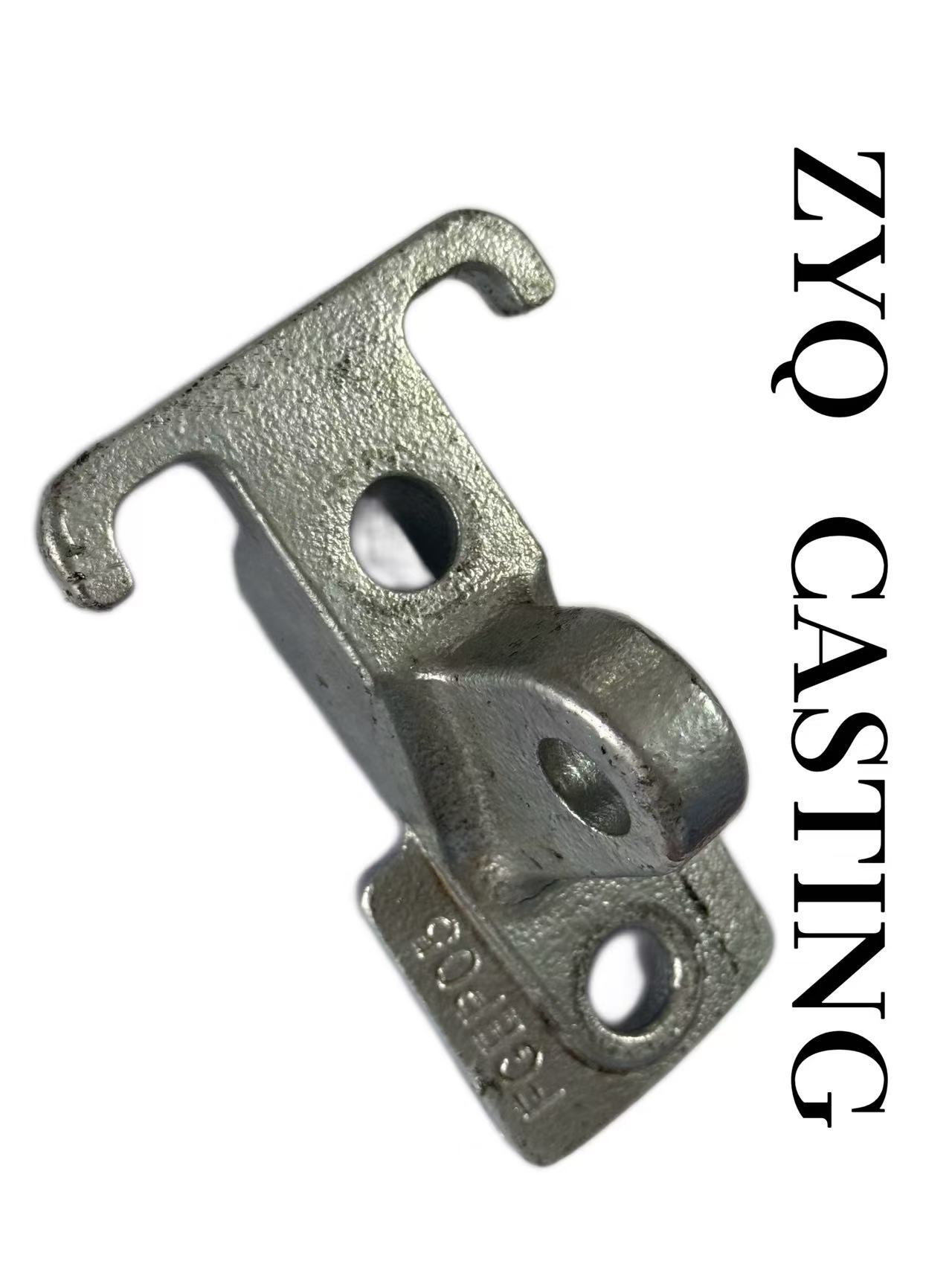
Tight control over casting dimensions often starts with the pattern and mold design. When foundries hold critical features to tighter tolerances, the raw casting arrives closer to the final profile. This means fewer roughing passes, less stock to remove, and a shorter overall machining cycle. Instead of planning for generous cleanup allowances, engineers can specify near-net shapes that only need light finishing on selected surfaces.
For features like bores, mounting faces, and seal surfaces, a well-defined tolerance band can eliminate the need for multiple setup changes. If the casting is consistent from batch to batch, CNC programs can rely on predictable starting stock. That predictability cuts down on probing time and lets the machine run unattended longer. Secondary operations such as drilling, tapping, and reaming become simpler because the casting already provides a stable reference.
Working with the foundry to establish realistic tolerances on non-critical areas also avoids over-processing. Not every surface needs grinding or milling; some can be left as-cast if the tolerance is documented and repeatable. The result is a more efficient handoff from casting to machining, with fewer touchpoints and lower tool wear.
Complex Internal Passages Without Welding or Extra Assembly
Introducing internal channels into a part usually meant welding together multiple machined sections or bolting on extra manifolds. That approach adds potential leak paths, increases part count, and forces design compromises. When passages can be formed directly within a single component, the need for those secondary operations disappears.
The real advantage shows up in shapes that were simply impossible before. Cooling lines can follow the contour of a mold cavity, hydraulic routing can bend through tight spaces without sharp elbows, and fluid paths can be tuned for lower pressure drop. Because no welds or fasteners interrupt the wall, the structure stays continuous and less prone to fatigue.
Manufacturing teams also spend less time on assembly, inspection, and rework. A single printed or cast part replaces what used to be a small kit of components. The result is often a lighter, stiffer, and more reliable assembly, whether it ends up in a turbine housing, a robotic end effector, or an injection mold.
Food Processing and Marine Hardware Are Just Two Common End Uses
Walk through any commercial kitchen or wander a working dock, and you'll quickly notice how much depends on materials that can shrug off moisture, salt, and constant scrubbing. Food processing equipment—think mixing paddles, cutting blades, and conveyor guides—rarely gets a break. It's exposed to acidic tomato paste, briny pickling solutions, and high-pressure washdowns. Marine hardware faces an even harsher routine: salt spray, UV light, and the occasional knock against a piling. The common thread isn't glamour; it's the quiet reliability of metals and polymers chosen specifically because they won't pit, rust, or snap when the environment turns unfriendly.
In both worlds, the phrase 'good enough' doesn't last long. A stainless alloy that works fine for a salad spinner might fail within months on a fish processing line where chloride levels spike. Similarly, a zinc-plated bracket that holds a shelf in a warehouse would be a liability on an outboard motor mount. Designers in these fields obsess over small details: whether a bearing grade can handle repeated thermal cycling, whether a seal material will swell in contact with fish oil, whether a hinge pin will gall after a thousand salt-laden cycles. It's not about chasing perfection—it's about avoiding the visible rust streak, the seized fitting, or the crack that sends a whole batch to scrap.
What separates a forgettable component from a workhorse is often the least obvious choice. A food-grade plastic with glass fiber might survive a 200°F washdown but turn brittle in a freezer room. A marine-grade aluminum that resists pitting in a harbor could be useless in a food plant where alkaline cleaners eat away the protective oxide layer. That's why these two end uses—seemingly unrelated—share a library of hard-won lessons about corrosion, fatigue, and surface finish. The best hardware doesn't advertise itself. It just keeps running, season after season, until someone finally notices it hasn't been replaced.
Scaling From Prototype Quantities to Full Production Runs
Moving from a handful of prototype units to a full production run almost never plays out as a simple multiplication of effort. In the prototype phase, you can get away with hand-fitted parts, off-the-shelf adhesives that someone applied with a syringe, and tolerances that were 'good enough' because each piece was checked by an engineer. That comfort zone disappears the moment you commit to producing hundreds or thousands of units per week. Tooling needs to be redesigned for durability, assembly steps have to be broken down into foolproof motions, and every material choice has to survive procurement scrutiny. I've seen teams burn weeks trying to scale a design that worked beautifully as a one-off, only to discover that a specialized fastener wasn't available in reel packaging for automated insertion or that a 3D-printed bracket couldn't hold its dimensions across different batches of resin.
A practical way to bridge this gap is to treat scaling as its own engineering project rather than a procurement afterthought. Run a pre-production pilot with the actual production tooling and real operators, not the design team. Measure cycle times, reject rates, and tool wear over a few hundred cycles. Compare those numbers against your prototype baseline and force yourself to investigate every delta. Often the biggest surprises come from supplier variability: a metal stamping vendor might have held tight tolerances for your ten prototype brackets, but their high-volume line introduces burrs or dimensional drift that only shows up after the first few thousand hits. Building a small inventory buffer and having a clear containment plan for out-of-spec parts during ramp-up is far cheaper than discovering the issue on a customer's assembly line.
Scaling also changes the role of quality control from a gatekeeper mentality to a feedback loop. At prototype quantities, you can inspect every unit and still sleep at night. At full production rates, that approach collapses under its own weight. Instead, you need to bake measurement into the process itself—fixtures that locate parts the same way every time, in-line sensors that flag drift before it becomes scrap, and operators trained to recognize the early signs of tool wear or material variation. The goal isn't to eliminate variation entirely (that's a fantasy), but to keep it inside a range you understand and can defend. And remember that unit cost isn't the only number that shifts; your cash flow, warehouse space, and supplier payment terms all start to matter much more when the volume jumps from dozens to thousands.
Inspection Routines That Catch Flaws Before Shipment
A final visual sweep under bright, angled lighting reveals surface defects that standard overhead lights often miss. Inspectors run gloved fingers along seams and edges, feeling for rough spots or uneven gaps that photos can't capture. This hands-on pass catches hairline cracks, faint scratches, and slight color mismatches before any box gets sealed.
Dimensional checks follow, using purpose-built jigs rather than generic rulers. Each part is dropped into a custom gauge that confirms critical measurements in seconds. If something doesn't sit flush, the routine halts and the lot is flagged for rework. This step stops tolerance drift that creeps in during long production runs.
Functional testing happens on a rotating sample from every batch, not just the first few units. Switches are cycled, joints are flexed, and connectors are mated and unmated under load. Any irregular click, resistance, or wobble triggers a deeper teardown. By catching these flaws before shipment, the line avoids costly returns and keeps downstream assembly moving without surprises.
FAQ
Stainless steel casting allows near-net-shape production of components with complex internal cavities, thin walls, and fine surface detail. It reduces machining time and material waste compared to forging or fabrication from bar stock, which is especially valuable for low-volume or highly intricate parts.
Common sectors include food processing equipment, marine hardware, chemical pumps and valves, medical devices, automotive exhaust components, and architectural fittings. Any field needing corrosion resistance plus mechanical strength tends to source these castings.
Many use silica sol investment casting combined with CNC machining for critical dimensions. Wax pattern injection, controlled shell building, and spectrographic alloy verification help keep dimensional drift low. Some shops also run coordinate measuring machines on first articles and batch samples.
Grades like 304, 316, 316L, 17-4 PH, and duplex 2205 are frequently poured. Each suits different needs: 316L for chloride exposure, 17-4 PH for high strength after heat treatment, and duplex for stress corrosion cracking resistance.
Yes, many foundries accept orders from a few dozen parts for testing up to tens of thousands per year. They often keep multiple shell lines active so prototype tooling can be reused when moving into series production without major process changes.
Depending on the part, suppliers can provide pickled and passivated surfaces, electropolishing, glass bead blasting, mirror polishing for sanitary fittings, plus machining, heat treatment, pressure testing, and assembly. Finish choice usually depends on the end-use environment.
Chinese foundries often combine lower labor and material handling costs with established supply chains for raw alloys and finishing services. Lead times can be competitive too, especially when a single vendor manages casting, machining, and surface treatment under one roof.
Look for documented process control rather than just price. Ask about material certifications, in-house spectrometers, heat treatment records, and sample inspection reports. A short video call showing the foundry floor and existing similar parts can reveal more than a polished catalog.
Conclusion
Chinese stainless steel casting has moved far beyond basic metal forming. The material selection alone addresses real-world durability, with grades engineered to withstand repeated salt spray exposure and aggressive chemical washdown cycles without pitting or surface degradation. Just as important, foundries now hold casting tolerances tight enough to skip or significantly reduce secondary machining, which lowers cost and lead time. Internal passages that once demanded welded assemblies or extra fittings can now be cast directly into the part, preserving structural integrity and simplifying the overall design. This combination of corrosion resistance, dimensional accuracy, and design freedom is what makes these components attractive to buyers worldwide.
Food processing equipment and marine hardware are two obvious beneficiaries, but the same principles apply to pump housings, valve bodies, and sanitary fittings. Production scalability is another deciding factor: a foundry can deliver a handful of prototype castings for validation, then transition to full production runs without changing tooling or process parameters. Throughout every stage, inspection routines stay aggressive—dimensional checks, pressure testing, and surface crack detection happen before shipment, not after. That front-loaded quality control reduces costly rejections at the customer's receiving dock and keeps global supply chains moving with fewer interruptions.
Contact Us
Contact Person: Nico Yin
Email: [email protected]
Tel/WhatsApp: 8618561567088
Website: https://www.ductileironparts.com/
