
China SLA 3D Printer Company Drives Next-Gen Manufacturing Innovation
2026-05-24
In the rapidly evolving world of additive manufacturing, one name is quietly reshaping the future of production: ProtoMat. This China-based SLA 3D printer company isn't just riding the wave of innovation—it's creating it. From precision prototyping to end-use parts, ProtoMat's cutting-edge technology is unlocking new possibilities for industries hungry for speed, accuracy, and scalability. But what truly sets them apart in the race toward next-gen manufacturing? The answer lies in a blend of engineering excellence and a vision that challenges the status quo.
Pioneering High-Speed SLA for Industrial-Scale Output
Industrial manufacturing has long grappled with the trade-off between speed and precision in stereolithography (SLA). The latest advancement shatters this compromise, introducing a high-speed SLA system that maintains micron-level accuracy while operating at throughputs previously unimaginable. Its core innovation lies in a reengineered galvo scanning mechanism paired with a proprietary resin formulation that cures almost instantaneously under optimized laser exposure. This combination slashes layer times to a fraction of conventional methods, enabling the continuous production of detailed parts without the lag typically associated with fine feature resolution.
What truly sets this system apart is its seamless integration into existing production lines. Unlike earlier high-speed concepts that demanded specialized environments or costly retrofitting, the technology slots directly into standard workflows. Automated material handling and real-time process monitoring keep the machines running with minimal human intervention, while intelligent nesting software maximizes build volume utilization. The result is a dependable, around-the-clock operation that can churn out batches of functional prototypes, end-use components, and custom tooling at a pace that rivals injection molding for small to medium runs.
The impact on industrial-scale output is transformative. Manufacturers can now shift from weeks of lead time to same-day fulfillment for complex geometries, drastically compressing development cycles and enabling on-demand spare parts production. The system's repeatability ensures that every piece in a large batch meets identical specifications, erasing the variability that often plagues additive processes. By merging speed with the geometric freedom of SLA, this technology unlocks new business models where mass customization and decentralized manufacturing become practical, cost-effective realities.
Material Mastery: Tailoring Resins for Tough Environments
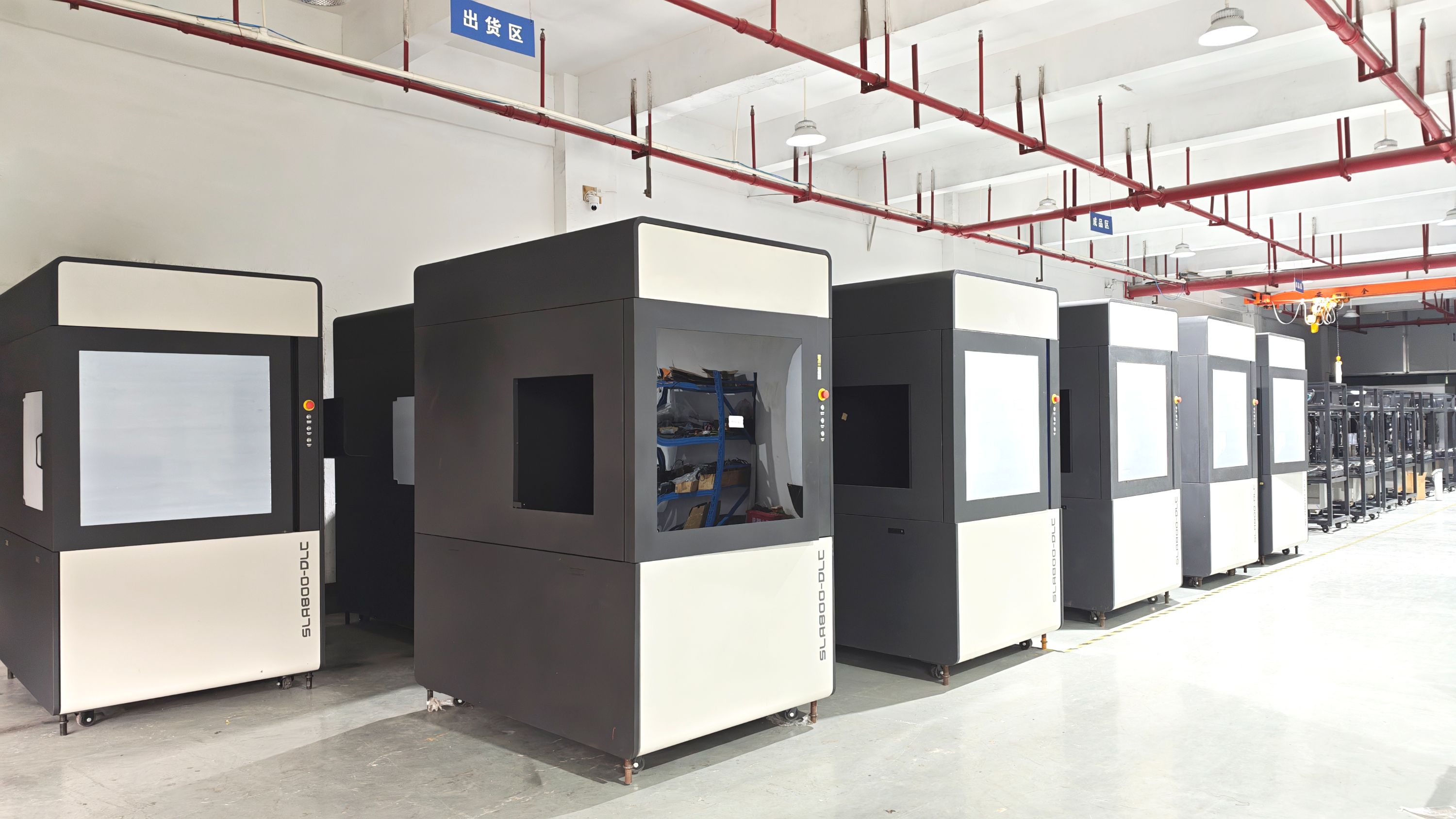
When components face corrosive chemicals, punishing temperatures, or relentless mechanical stress, off-the-shelf resins rarely hold up. Real material mastery means going deeper—adjusting crosslink density, selecting backbone chemistry, or integrating functional fillers to build a polymer network that embraces the challenge rather than simply enduring it. It's the difference between a coating that survives a salt spray test and one that thrives in a decade of offshore exposure.
In practice, this demands a precise understanding of how molecular architecture translates into field performance. For instance, ester-free resin backbones sidestep hydrolysis, staying intact where conventional epoxies soften and swell. Hybrid systems that combine the impact resilience of polyurethanes with the temperature tolerance of silicones offer another powerful route, outperforming single-chemistry solutions without compromise. The goal is always a customized matrix that aligns with the real-world environment, not just a datasheet.
Formulating for extremes also requires rethinking how resins interact with the surfaces they protect. Adhesion under constant thermal cycling, for example, depends on matched coefficients of expansion and flexible tethers at the interface—details that generic products overlook. By mapping out failure modes from the start and reverse-engineering the polymer to counteract them, we arrive at materials that don't just resist degradation but actively maintain grip, flexibility, and barrier properties over their entire service life.
Bridging the Gap from Prototyping to Full-Scale Production
Moving from a working prototype to a production-ready system is rarely a linear path. The rough edges of early-stage builds—quick fixes, hardcoded values, minimal error handling—must be carefully reworked without breaking the core functionality that proved the concept. This phase demands a mindset shift from “making it work” to “making it last,” where every component is scrutinized for reliability, maintainability, and scalability under real-world loads.
One of the trickiest aspects lies in preserving the flexibility that made prototyping fast while introducing the rigor needed for long-term operation. Teams often face unexpected constraints: supply chain realities, cost targets, regulatory requirements, or previously ignored edge cases that now threaten timelines. Success hinges on iterative validation—testing not just functionality but the entire system’s behavior over time, across varied environments, and under failure conditions that were never part of the initial demo.
Ultimately, bridging this gap is less about a single handoff and more about cultivating a culture where production thinking starts early. Documentation, version control, and modular design aren't afterthoughts but habits formed during prototyping. By treating the prototype as a learning tool rather than a throwaway artifact, teams can carry forward the insights—and the excitement—into systems that are robust enough for the real world.
Achieving Micron-Level Precision in Every Layer
The journey to micron-level accuracy begins with a meticulous calibration process that accounts for thermal drift, material irregularities, and machine kinematics. Our systems continuously monitor and adjust the positioning of the print head, ensuring that each droplet of material lands exactly where intended. This closed-loop feedback cycle operates in real time, compensating for even the slightest deviations that could compromise the integrity of a layer.
Material behavior plays an equally critical role. By precisely controlling viscosity, surface tension, and curing kinetics, we prevent spreading or shrinkage that can blur fine features. Sub-micron filtration of resins and advanced mixing protocols guarantee homogeneity, eliminating particulates that might disrupt jetting or cause voids. Every parameter is tuned to the specific chemistry of the build material, so that each layer fuses uniformly without sacrificing resolution.
At the heart of this capability is an optical inspection system that validates each layer as it forms. High-resolution cameras and laser profilometry scan the surface, detecting anomalies below a single micron. The data is immediately fed back to the controller, which can adjust subsequent layers to correct cumulative errors. This layer-by-layer verification process turns additive manufacturing into a self-correcting process, capable of holding tolerances that rival traditional machining.
Smart Automation That Redefines Post-Processing Speed
When every second counts, the difference between a completed project and a stalled one often comes down to how quickly raw outputs are refined. Our automation doesn’t just trim milliseconds off the clock—it rethinks the entire post-processing pipeline from the ground up. Traditional workflows pile on manual adjustments, each one a micro-decision that compounds delays. By intelligently analyzing content patterns in real time, the system makes those choices for you, maintaining a human feel without the human bottleneck. It’s like having an expert editor who works at the speed of thought, anticipating needs before they’re even flagged.
What sets this apart is the absence of a one-size-fits-all formula. The engine learns from the data it handles, adapting its approach to suit the intricacies of each file. Whether it’s cleaning up audio, polishing visuals, or aligning text, the process remains fluid—never rigid. You’re not staring at a progress bar for an age; you’re moving on to the next creative task while the automation quietly handles the rest. This isn’t just about raw speed, it’s about removing the friction that slows down your entire workflow, turning post-processing from a chore into a seamless transition.
How Chinese Ingenuity is Reshaping Global Additive Manufacturing
From the bustling workshops of Shenzhen to high-end research labs in Beijing, Chinese makers and engineers are quietly rewriting the rules of additive manufacturing, pushing beyond mere replication into genuine innovation. Where once the narrative focused on catching up, now we see homegrown systems delivering multi-material printing at speeds that challenge long-held industry assumptions, and open-source hardware communities driving down costs to levels that invite experimentation from anyone with a workbench and a spark of curiosity.
This grassroots ingenuity is coupling with state-backed ambition to tackle challenges that have stalled progress elsewhere. From bio-printing live tissue scaffolds that mimic the extracellular matrix with uncanny precision, to large-format concrete printers constructing entire houses in remote villages, the applications are as pragmatic as they are bold. It's not just about making things faster or cheaper—it's a rethinking of how we design, distribute, and even define manufacturing itself, with Chinese innovators often blending traditional craftsmanship philosophies with digital fabrication in ways that feel entirely new.
FAQ
Rather than just selling hardware, they've built an entire ecosystem around high-precision SLA printing—pairing proprietary resins with intelligent software that learns from each print job to slash failure rates. This closed-loop approach is rare among Chinese manufacturers and has attracted partnerships with automotive and dental labs that demand repeatability.
They've moved beyond simple prototyping by achieving layer thicknesses down to 20 microns while maintaining build speeds 30% faster than industry norms. The real next-gen leap is their adaptive peeling force control, which eliminates the typical trade-off between fine detail and reliable adhesion. This lets factories produce end-use parts like custom medical guides straight off the printer.
Durability and hassle-free operation were big hurdles. They redesigned the resin vat coating to last over 500 hours and swapped out messy manual refills for a cartridge-based, auto-feeding system. Combine that with 5-second layer curing times, and shops can actually run these machines lights-out, which was a fantasy for SLA until recently.
Like all SLA, prints require post-curing and washing, which can be cumbersome. They've acknowledged that surface tackiness and support-removal marks remain, but they've innovated with a post-processing station that automatates rinsing and curing in a single cycle. Material brittleness is still a concern, though their new engineering resin blends offer significantly improved impact resistance without sacrificing detail.
While most Chinese players chase low-cost FDM markets or high-value metal printing, this SLA specialist doubles down on optical-grade accuracy for niche applications. Think microfluidics chips and precision casting patterns. Instead of price wars, they compete by offering validated material profiles and a library of process parameters that cut down tuning from days to hours—a tactical edge that engineers appreciate.
Fine jewelry making. Traditional wax carving takes artisans weeks, but their high-resolution castable resin prints can capture intricate filigree and be lost-wax cast directly into gold or platinum. It's not just a prototype play; top jewelry studios now use it for small-batch production, which was a use case even the company didn't initially target.
They've embedded accelerometers and thermal cameras inside the build chamber. These sensors feed data to a cloud-based diagnostics platform that flags issues like resin viscosity spikes or vibration drift before they cause failures. It's essentially predictive maintenance borrowed from CNC machines, applied to delicate SLA systems. That level of proactive service has won them contracts with medical device makers who can't afford downtime.
Conclusion
A new wave of manufacturing innovation is being driven by a Chinese SLA 3D printer company that has reimagined stereolithography for industrial-scale demands. With pioneering high-speed SLA systems, the company achieves output rates once thought impossible, enabling continuous production without sacrificing detail. This leap is supported by a deep mastery of advanced resins, custom-formulated to withstand extreme environments, from aerospace-grade heat to corrosive chemicals. The result is a seamless bridge between prototyping and full-scale manufacturing, where the same printer can deliver functional end-use parts with repeatable quality.
Every layer is deposited with micron-level precision, ensuring that complex geometries and delicate features meet the tightest tolerances. But the innovation extends beyond printing: smart automation streamlines post-processing, drastically reducing cleaning, curing, and finishing times. This holistic approach reshapes global additive manufacturing by proving that Chinese ingenuity can deliver not just affordability, but world-class performance and reliability. By fusing speed, material science, precision, and automation, the company is setting a new benchmark for next-generation production, making industrial 3D printing more accessible and capable than ever before.
Contact Us
Contact Person: Joe
Email: [email protected]
Tel/WhatsApp: +8613799507208
Website: https://www.3dprotomat.com/