
Best Inconel Alloys for High-Temperature and Corrosion-Resistant Applications
2026-09-10
Inconel alloys often blur the line between metal and magic—until you see them shrug off furnace heat or acid that would chew through lesser materials. Choosing the right grade, however, is rarely straightforward. From aerospace exhausts to chemical processing, each environment demands a specific balance of nickel, chromium, and trace elements. At Jiangsu Baowu New Materials, we've spent years matching these superalloys to the harshest jobs. This guide walks through the Inconel variants actually worth your attention and where they prove their worth.
When Heat and Chemicals Team Up, These Inconel Grades Hold the Line
Inconel 625 and 718 don't just survive in scorching, corrosive environments—they practically yawn at them. The molybdenum and niobium in 625 lock the alloy's microstructure in place, so it keeps its strength even as temperatures climb past 700°C while shrugging off chloride-induced pitting and stress corrosion cracking. Meanwhile, 718 relies on precipitation-hardened gamma-prime phases to deliver outstanding creep resistance, making it a go-to for gas turbine hot sections and chemical reactors that see both oxidizing acids and reducing fumes on the same shift.
For tougher oxidation battles, Inconel 600 and 601 bring a different kind of armor. The high nickel content in 600 gives it broad resistance to organic and inorganic corrosives, and it holds up remarkably well in carburizing atmospheres that would embrittle lesser alloys. Add a dash of aluminum to the mix and you get 601, which forms a dense, self-healing alumina scale at high temperatures—this keeps sulfur-bearing gases and combustion byproducts from eating into the base metal, which is why furnace muffles and radiant tubes made from 601 outlast their stainless steel counterparts by years.
When both mechanical stress and aggressive chemistry hit at once, Inconel 617 and 725 step into the ring. The cobalt-molybdenum combination in 617 gives it exceptional high-temperature strength above 900°C, paired with solid resistance to both oxidation and carburization—ideal for reformer tubes and superheater components. On the precipitation-hardened side, 725 uses titanium and niobium additions to achieve strength levels near 718 but with far better resistance to hydrogen sulfide and sour gas environments, a combination that keeps offshore wellhead hardware and downhole tools from cracking under pressure.
Not All Nickel Alloys Are Equal: Breaking Down Inconel 600, 625, 718, and X-750
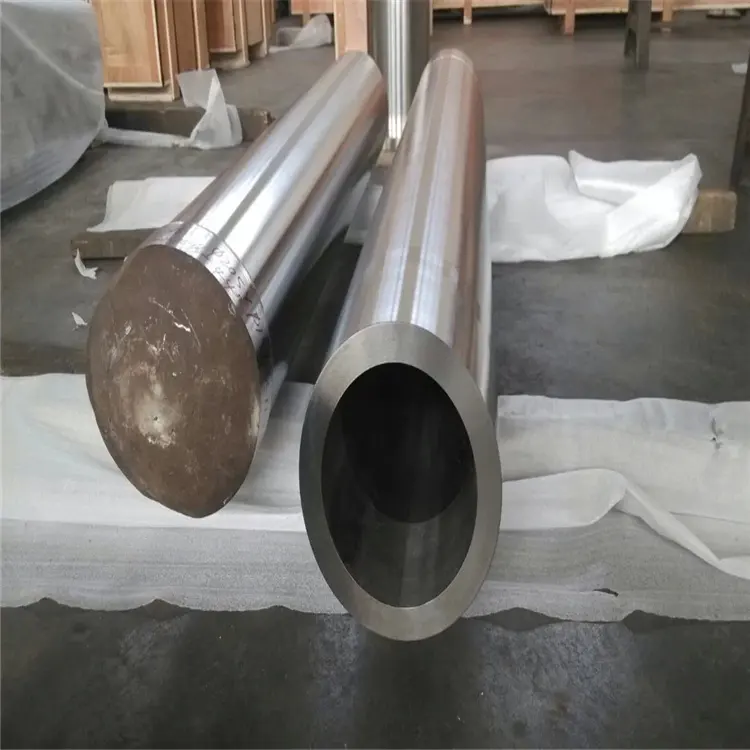
When engineers hear "nickel alloy," they often assume all grades behave similarly under heat, pressure, and corrosion. That assumption falls apart quickly once you compare Inconel 600, 625, 718, and X-750 side by side. Each one was developed for a different set of demands, and the differences show up in chemistry, mechanical strength, and long-term performance. Inconel 600 leans heavily on nickel and chromium for high-temperature oxidation resistance, but it lacks the precipitation hardening that gives 718 its impressive tensile strength. Meanwhile, 625 gets its toughness from solid-solution strengthening with molybdenum and niobium, making it a favorite in marine and chemical processing. X-750, though less talked about in some circles, brings its own specialty: excellent relaxation resistance in springs and fasteners at elevated temperatures.
The practical consequences of these distinctions can be costly if ignored. Take a gas turbine component, for example. Using Inconel 600 where 718 is specified could mean premature creep failure because 600 cannot sustain the same load at 650°C. Conversely, paying a premium for 625 in a low-stress furnace application is simply wasteful when 600 would handle the environment just fine. Weldability also varies significantly. Inconel 625 is renowned for its weld overlay capabilities, often used to protect less resistant steels in harsh conditions. Inconel 718, on the other hand, demands precise heat treatment after welding to restore its aged strength, otherwise the heat-affected zone becomes a weak point. X-750's age-hardening process is notoriously sensitive; even small deviations in time or temperature can leave the material brittle.
Field experience reinforces these lessons. Maintenance records from chemical plants show that Inconel 600 piping lasts decades in nitric acid service but fails quickly in chloride-rich environments where 625 thrives. Aerospace shops routinely machine 718 in the solution-annealed state before aging, because trying to cut it after full hardening destroys tooling. And in nuclear reactors, X-750 springs have been replaced with other alloys after stress corrosion cracking issues, yet it remains unmatched for certain high-cycle fatigue applications. The bottom line is simple: specifying a nickel alloy by brand familiarity rather than by its actual properties invites expensive failures. Breaking down 600, 625, 718, and X-750 reveals four distinct engineering tools, not four interchangeable options.
Inside the Furnace: Why Inconel 625 Excels in Exhaust and Turbine Hot Sections
Jet exhaust streams and turbine hot sections punish alloys with a combination of extreme heat, corrosive gases, and mechanical stress. Inconel 625 survives precisely because its metallurgy is built around resisting all three at once. The nickel base holds its face-centered cubic structure far past the point where steels soften, while chromium forms a tenacious oxide layer that keeps sulfur and vanadium from fuel combustion from eating into the surface. Molybdenum and niobium don't just sit in the matrix; they promote solid-solution strengthening and, at high temperature, allow fine intermetallic phases to pin dislocations. That slows creep and helps the material keep dimensional stability in parts like exhaust liners and transition ducts that see uneven heating.
What separates Inconel 625 in this punishing environment is how it handles thermal cycling. Turbine exhaust components rarely sit at a constant temperature; they heat, cool, and heat again, often with steep gradients across the same part. The alloy's low thermal expansion relative to stainless steels and its resistance to thermal fatigue cracks come from the same atomic-scale mechanisms that give it strength at 650°C and above. Sodium, potassium, and other contaminants from marine or industrial intake air accelerate attack on many alloys, but the molybdenum content in 625 disrupts hot corrosion mechanisms. As a result, it finds use in exhaust stacks, afterburner liners, and turbine cases where maintenance intervals are expected to be long and failure is not an option.
Salt, Acid, and Seawater: Matching Inconel Grades to Harsh Chemical Environments
The real challenge in chemical processing rarely comes down to a single corrosive species. It is the overlap—hot seawater loaded with dissolved salts, acidic brines from scrubber blowdown, or oxidizing chloride solutions—that determines material survival. Inconel 625 works well here because its nickel-chromium-molybdenum balance, with roughly 9% molybdenum, resists pitting and crevice corrosion in stagnant seawater and chloride-rich streams. It also avoids chloride stress corrosion cracking that would split standard austenitic stainless steels.
When the environment shifts toward mixed acids, the choice changes. Inconel 690, with about 30% chromium, handles oxidizing acids such as nitric acid better than most nickel alloys, while Inconel 600’s high nickel content suits caustic and mildly reducing conditions. Neither is ideal for seawater, though. For that, 625 or the more heavily alloyed Inconel 686 is preferable; 686 adds enough molybdenum and tungsten to manage aggressive acid-chloride mixtures that would pit 625 over time.
Matching a grade to a harsh chemical environment means looking at temperature, chloride level, pH, and whether the acid is oxidizing or reducing. A seawater-cooled heat exchanger with low flow and biofilm potential might call for 625, whereas a bleach plant scrubber handling wet chlorine and hydrochloric acid could justify Inconel 686. Skipping that evaluation often leads to localized failures—pitting under deposits or at crevices—rather than uniform thinning, and those failures tend to appear quickly once initiated.
The Creep and Oxidation Threshold: What High-Temperature Really Means for Alloy Selection
High-temperature alloy selection isn't about reaching a single melting point; it's about two competing damage mechanisms that operate on different schedules. Creep accumulates slowly under stress as grains slide and vacancies migrate, while oxidation attacks the surface almost immediately once the protective oxide layer breaks down. An alloy that resists one may fail the other.
In practice, the threshold where creep becomes non-negotiable is often lower than designers expect. For ferritic steels, measurable creep can begin around 400–450°C, whereas oxidation rates only become severe above 550–600°C depending on atmosphere. That gap forces a choice: do you prioritize creep strength and accept faster surface degradation, or choose an oxidation-resistant composition that may lack long-term microstructural stability?
Alloy developers often bridge the two by adding chromium or aluminum to form stable oxide scales, while carbide or intermetallic precipitates pin grain boundaries against creep. Yet these additions interact. Too much chromium can promote sigma phase embrittlement after long exposure, and aluminum that improves oxidation resistance can reduce weldability. Selection therefore hinges on matching both thresholds to the actual service temperature, not to a single advertised maximum.
From Aerospace to Chemical Plants: Cross-Industry Lessons in Inconel Performance
Aerospace demands push Inconel through brutal thermal cycling and oxidizing environments, but chemical plants subject the same alloys to continuous exposure from aggressive acids, alkalis, and chlorides. The first transferable lesson is that high-temperature creep resistance does not equal aqueous corrosion resistance. An Inconel 718 turbine disk performs brilliantly at 650°C, yet that same grade can pit within months in a wet hydrochloric acid stream at 60°C. Engineers who treat Inconel as one monolithic material miss the point: grades like 625, C-276, and 690 each solve different problems, and specifying the wrong one for a chemical process is a costly mistake that no amount of wall thickness can fix.
A second insight from aerospace is the outsized role of surface condition. Aircraft manufacturers impose strict finishing standards—controlled machining, shot peening, and surface profilometry—because micro-cracks and residual tensile stress are where fatigue and stress corrosion cracking begin. Chemical plants, by contrast, often accept rough welds, grinding marks, or heat tint as normal. Those same defects become initiation points for chloride-induced stress corrosion cracking in Inconel 600 or 800. Adopting aerospace-grade post-weld treatments, including pickling, passivation, and even laser shock peening in critical areas, has extended service life in heat exchangers and reactor vessels far beyond what conventional chemical industry practice would predict.
Perhaps the most underappreciated lesson involves data feedback loops. Aerospace programs track every flight cycle, thermal excursion, and inspection finding, feeding that data into predictive models that determine when a component is retired. Chemical plants frequently rely on fixed replacement intervals or reactive shutdowns after a leak. By applying similar digital tracking—logging actual operating temperatures, pressure spikes, corrosive species concentrations, and corrosion coupon weight loss—operators can build a reliable remaining-life model for Inconel components. This approach avoids both premature scrapping of expensive alloy parts and the catastrophic failures that occur when a critical fitting lets go in the middle of a campaign. The cross-industry transfer is not about copying procedures, but about borrowing the discipline of treating material performance as a continuously updated engineering parameter rather than a static property.
FAQ
Inconel 601 tends to stand out in furnace work because its nickel-chromium base with added aluminum forms a tightly adherent oxide layer that resists spalling through repeated thermal cycling. While Inconel 617 gives higher creep strength above 1000°C, 601 is easier to fabricate and often costs less for radiant tubes, muffles, and burner nozzles.
Inconel 718's strength relies on niobium and aluminum/titanium precipitation hardening, which consumes chromium into secondary phases. This leaves less chromium available in the matrix to maintain passivity in reducing acids or chloride-rich environments. In hot sulfuric or hydrochloric service, Inconel 625 or C-276 type alloys usually perform better despite lower mechanical strength.
Inconel 617 was designed around a cobalt-molybdenum solid-solution strengthening mechanism with roughly 22% chromium and 12% cobalt. This combination keeps useful tensile and creep-rupture properties beyond 980°C while retaining good resistance to oxidation and carburization. Unlike cast superalloys, it can be welded and formed into complex sheet-metal combustor parts.
Inconel 690 is preferred in nuclear steam generator tubing and certain chemical processing equipment where resistance to stress corrosion cracking in high-temperature water or caustic solutions is critical. Its near 30% chromium content gives it a more stable passive film than Inconel 600, though it sacrifices some fabricability and high-temperature strength.
X-750 gets its strength from gamma-prime precipitates formed by aluminum and titanium, and it retains useful properties up to about 870°C in some conditions. Unlike 718, it is more tolerant of long-term exposure at high temperature without overaging as quickly, making it suitable for gas turbine hot-section bolts, exhaust valve springs, and nuclear reactor internals.
Inconel 625's molybdenum and niobium provide excellent resistance to pitting and crevice corrosion in chloride media, but its chromium oxide scale can be attacked by sulfur-bearing gases at elevated temperature. In reducing sulfidizing atmospheres above about 650°C, nickel-chromium alloys with higher chromium and aluminum, such as 601 or 617, often form more protective scales.
Inconel 725 is frequently selected for high-strength fasteners, hangers, and tubular components in sour wells. Its age-hardening response from niobium and titanium produces yield strength close to 827 MPa while maintaining excellent resistance to sulfide stress cracking and chloride pitting, which makes it a direct upgrade from Inconel 625 when mechanical loads require higher strength.
Conclusion
Heat and chemicals rarely act alone in demanding service environments, so alloy selection hinges on how chromium, molybdenum, niobium, titanium, and aluminum cooperate. Inconel 600 relies on a high nickel content to resist chloride stress-corrosion cracking and stands up well to caustic and reducing acids, yet it gives ground when creep strength or oxidizing acids enter the picture. Inconel 625 adds molybdenum and niobium for solid-solution strengthening and pitting resistance, which is why it holds the line inside exhaust ducts and turbine hot sections where thermal cycling and acidic condensates meet. Inconel 718 takes a different route, using precipitation hardening to deliver very high tensile and fatigue strength at turbine disk temperatures, while X-750 brings similar gamma-prime strengthening to springs, fasteners, and other components that must resist relaxation under sustained load.
Matching a grade to salt, acid, or seawater means looking beyond a single corrosion number. Inconel 625 tolerates chloride-rich seawater and flue gas desulfurization slurries because molybdenum widens the passive range and resists pitting, but it is not the default answer for strongly oxidizing acids at high temperatures. Inconel 600 remains a workhorse for caustic evaporators and high-purity water systems, though designers must watch its upper temperature limit. Creep and oxidation thresholds redefine high temperature once service exceeds roughly 650°C, where precipitation-hardened alloys like 718 and X-750 start to lose strength stability while solid-solution 625 can still carry load but may need oxidation-resistant coatings. Experience from aerospace engine disks, chemical heater tubes, and power turbine liners repeatedly shows that the best Inconel choice is the one whose strengthening mechanism and alloying additions align with the dominant failure mode, whether that is fatigue, creep, pitting, or stress-corrosion cracking.
Contact Us
Contact Person: Zoe Liang
Email: [email protected]
Tel/WhatsApp: 86 189 2128 6299
Website: https://www.baowuchina.com