
Advanced Folding Carton Cutting Die Making Equipment: Boosting Precision and Efficiency
2026-08-20
Every millimeter counts when folding cartons race through high-speed packaging lines. Yet many converters still battle die-cutting inconsistencies that cause jammed feeders, shifting creases, and unplanned downtime. That’s where ADEWO changes the game—advanced folding carton cutting die making equipment built to boost precision and efficiency from the very first cut to the final fold.
Precision That Holds Up on the Production Floor
On a busy shop floor, holding tight tolerances is less about what a machine can do once and more about what it keeps doing after eight hours of chips and coolant. Thermal drift in the spindle, fixture clamp pressure, and even ambient temperature swings can shift a bore or face by a few microns before anyone notices. The machines that actually hold spec are the ones with symmetric castings, through-spindle cooling, and thermal compensation loops that adjust in real time rather than waiting for a warm-up cycle.
Repeatability gets tested every time a tool changes or a new batch of material lands on the table. Instead of relying on a one-time calibration, a practical approach uses in-process probing to check critical features during the cycle. When a probe detects drift from tool wear or insert variation, the control offsets the next pass automatically. That keeps the process centered without an operator standing at the panel all shift.
The foundation matters just as much as the spindle. A machine bolted to uneven or vibrating flooring will never hold the same position twice, regardless of encoder resolution. Heavy cast bases, tuned damping, and sometimes simple isolation pads make a bigger difference than most spec sheets suggest. If the floor shakes from a nearby press, you want that energy absorbed before it reaches the ballscrew and the workpiece.
From CAD File to Cutting Die in Record Time
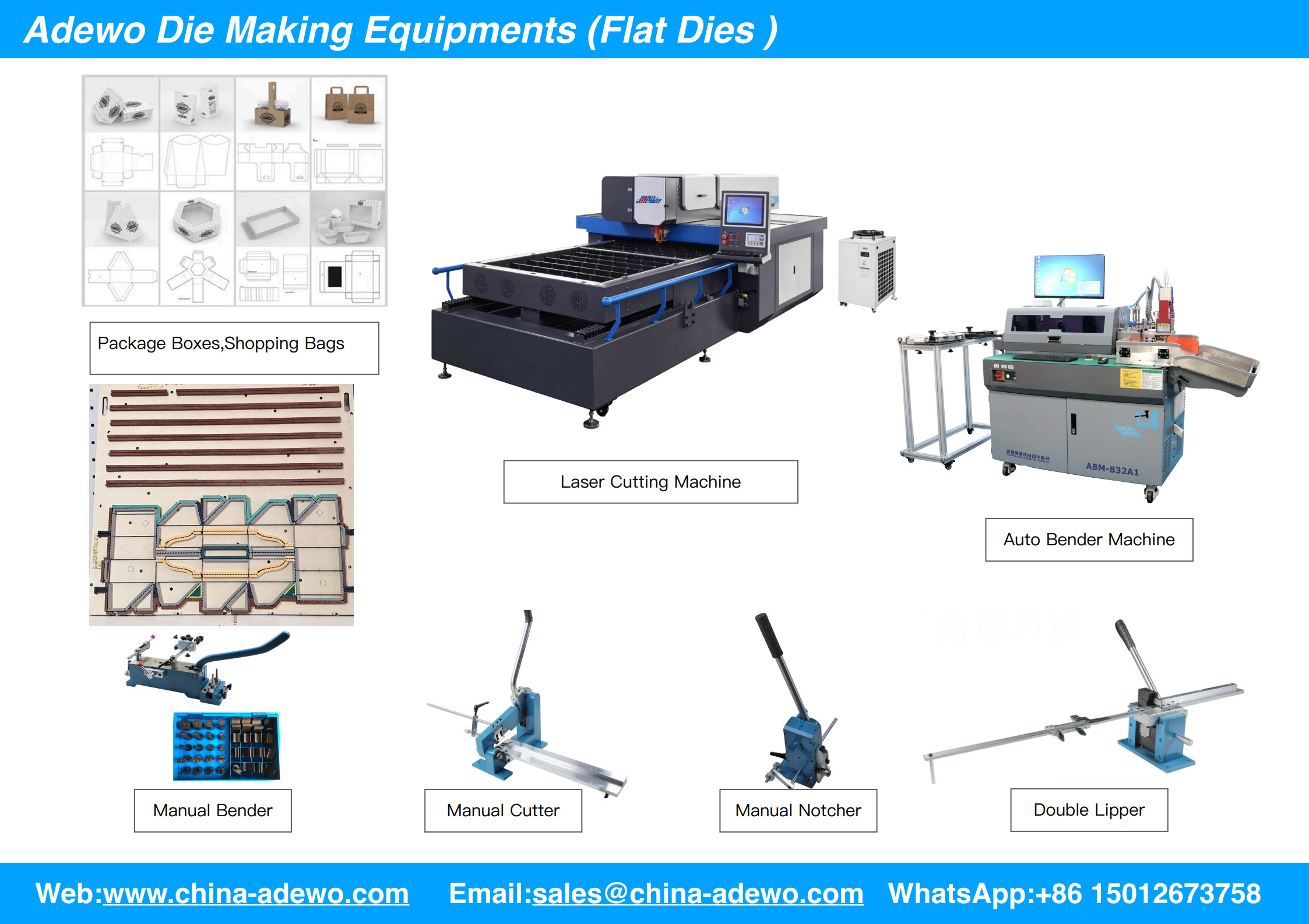
Turning a CAD file into a physical cutting die used to demand days of back-and-forth. Now the handoff feels almost instant. You upload the design, and the die-making process begins without friction.
What used to be a bottleneck is now the fastest step in your workflow. The geometry from the CAD file translates directly into the cutting edge, eliminating manual redrawing and the errors that come with it. This means your project moves from screen to production while the idea is still fresh.
Shorter lead times don't come from rushing; they come from removing unnecessary steps. That shift changes how you plan projects, how you talk to clients, and how often you can say yes to tight deadlines without hesitation.
Materials Engineering for Longer Die Life
Die life often hinges less on the hardness number stamped on a spec sheet and more on how the microstructure survives thousands of thermal and mechanical cycles. In tool steels, controlling the size and distribution of primary carbides—especially in grades like AISI M2 or D2—directly affects resistance to microchipping and heat checking. By refining grain size through controlled solidification and carefully managing the inclusion population, materials engineers can push crack initiation to later stages of service. This kind of work is rarely visible on the surface, but it shifts failure from sudden fracture to gradual, predictable wear.
A second lever is the combination of bulk toughness with a hard, low-friction exterior. Processes such as plasma nitriding, boronizing, and thin-film PVD coatings create a surface that resists galling and abrasive wear without making the entire tool brittle. The interface between coating and substrate matters just as much as coating hardness; poorly bonded layers spall under forming pressures and can accelerate damage. Powder metallurgy tool steels offer another path, delivering finer carbide networks than conventionally cast counterparts, which translates to more uniform properties from the cutting edge to the bolster area.
Heat treatment and stress relief are not merely steps on a traveler; they are design tools. Deep cryogenic treatment after quenching can transform retained austenite into martensite, improving dimensional stability and reducing the chance of stress-corrosion cracking in hot work applications. Tailoring tempering curves to the specific operating temperature of the die—rather than relying on a standard recipe—prevents softening during prolonged runs. Ultimately, longer die life comes from matching the entire thermal and mechanical history of the material to the failure mode that actually stops production, whether that is abrasive wear, plastic deformation, thermal fatigue, or gross cracking.
Automation That Cuts Setup, Not Corners
Most automation tools force a choice: get up and running fast, or accept that you'll be tweaking settings for hours. This one takes a different route. The setup flow is stripped down to the essentials, but nothing underneath is left unfinished. You're not handed a generic template and told to figure it out later.
Every step that used to require manual configuration now happens in the background, with sensible defaults that actually match how real teams work. The difference is in the details—permissions are pre-mapped, integrations are pre-tested, and the first run doesn't blow up because of a missing flag. You save the setup time, not the reliability.
The result is an automation layer that feels almost invisible. It starts working within minutes, but you never get that sinking feeling that something was skipped just to make the demo look good. It's the rare case where cutting setup time doesn't mean cutting corners.
Why Your Next Die Should Be Laser-Cut
Traditional die-making methods work, but they come with hidden costs — slower lead times, limited shape complexity, and tooling wear that quietly degrades cut quality over time. Laser cutting flips that script by using a focused beam instead of physical blades, which means there’s no contact with the material. No contact means no dulling, no pressure-related deformation, and no need to maintain a library of custom cutting dies for every new design you dream up.
The precision is simply on another level. A laser can hold tolerances most mechanical dies struggle to match, especially on intricate curves, tiny holes, or odd angles. You can go from a digital file to a finished, repeatably accurate die in a single afternoon — no milling, no grinding, no waiting on a specialist shop. That kind of responsiveness changes how you approach prototyping and small-batch production, because the cost and time penalty for iteration basically disappears.
There’s also a material freedom you don’t get with conventional dies. Thin metals, plastics, even some composites can be processed cleanly without swapping out tooling. And because the laser path is controlled by software, you’re not locked into a fixed outline — adjust the design, re-export, and cut again. For makers and small manufacturers tired of die inventories and rigid production lines, that flexibility is the strongest argument yet.
Reducing Waste Through Smarter Stripping and Blanking
Traditional stripping and blanking operations often leave behind a trail of underutilized sheet metal, with offcuts and skeleton waste piling up faster than most shops care to admit. Instead of treating the strip layout as an afterthought, forward-thinking fabricators are now re-evaluating how parts nest together, adjusting bridge widths and edge allowances to squeeze more usable pieces from every coil. Small tweaks in punch sequencing and die clearance reduce slug pulling and mis-hits, which in turn cuts down on rejected blanks that would otherwise head straight to the scrap bin.
Beyond the die itself, smarter blanking leans on real-time thickness monitoring and adaptive ram speeds to keep material flow consistent. When the press senses variation in gauge or hardness, it can fine-tune the stripping force rather than letting a one-size-fits-all setting tear fragile webs or leave stubborn tabs. This kind of closed-loop adjustment not only preserves the integrity of the strip but also extends tool life, meaning fewer sharpenings and less downtime—each contributing to a measurable drop in overall waste per production run.
Perhaps the most overlooked lever is operator insight. Encouraging press operators to log edge conditions, slug formation, and ejection hiccups builds a feedback loop that turns everyday observations into layout refinements. Pair that with periodic audits of skeleton weight versus finished part weight, and waste reduction stops being a vague goal—it becomes a set of numbers you can actually improve month over month.
FAQ
Modern systems combine CNC laser cutting with automated rule placement, which removes many manual layout steps. The result is tighter tolerances and far less rework compared to hand-cut dies.
Laser cutting heads follow CAD files directly, so curved slots and complex shapes are produced without drifting. Some machines hold positioning accuracy within a few microns, and the die board stays flat during processing to avoid distortion.
They cut plywood, acrylic, and composite die boards cleanly. Operators can switch material settings quickly, and the same file can be reused for different thicknesses without redrawing.
Automatic rule bending and insertion systems cut hours from each job. Rules are shaped and placed in one continuous pass, which reduces manual handling and lets one operator manage several stations.
Most advanced machines accept common CAD and CAM formats, so files from structural design programs transfer without re-entry. This cuts down errors and shortens the prepress-to-production cycle.
Short runs become much more economical because setup changes are quick. Digital control means switching from one layout to the next takes minutes rather than hours, which is useful for versioned packaging and samples.
Regular cleaning of laser optics, checking rule guides, and calibrating the cutting head are the main tasks. Many systems include diagnostic alerts that flag wear before it affects cut quality.
Die boards are cut right the first time and rule placement is more consistent, so downstream stripping and blanking produce fewer rejected sheets. That saves board material and reduces press downtime.
Conclusion
Modern folding carton cutting die production no longer tolerates the drift and wear that once forced operators to compensate on the floor. Laser-cut dies hold edge geometry within tight tolerances, so scores and cuts stay crisp through long runs. At the same time, materials engineering has pushed beyond standard rule and board combinations: harder cutting rules, treated plywood, and precision-milled ejection materials work together to extend die life and keep stripping stations clear. The result is a die that behaves the same at the first sheet and the ten-thousandth, cutting setup time and unscheduled stops.
Speed from CAD file to finished die has also changed. Automated bending, notching, and rule processing remove the manual variability that used to slow tooling departments. Smarter stripping and blanking layouts reduce waste by positioning scrap removal exactly where the sheet needs it, which matters when margins are thin. For converters, that shift from hand-finished dies to laser-cut, automation-driven production means fewer touchpoints, less material lost to trial cuts, and quicker turnaround on repeat jobs. Precision and efficiency no longer have to be traded against each other—they now come from the same machine.
Contact Us
Contact Person: KAELYN LEE
Email: [email protected]
Tel/WhatsApp: +86 15012673758
Website: https://www.china-adewo.com